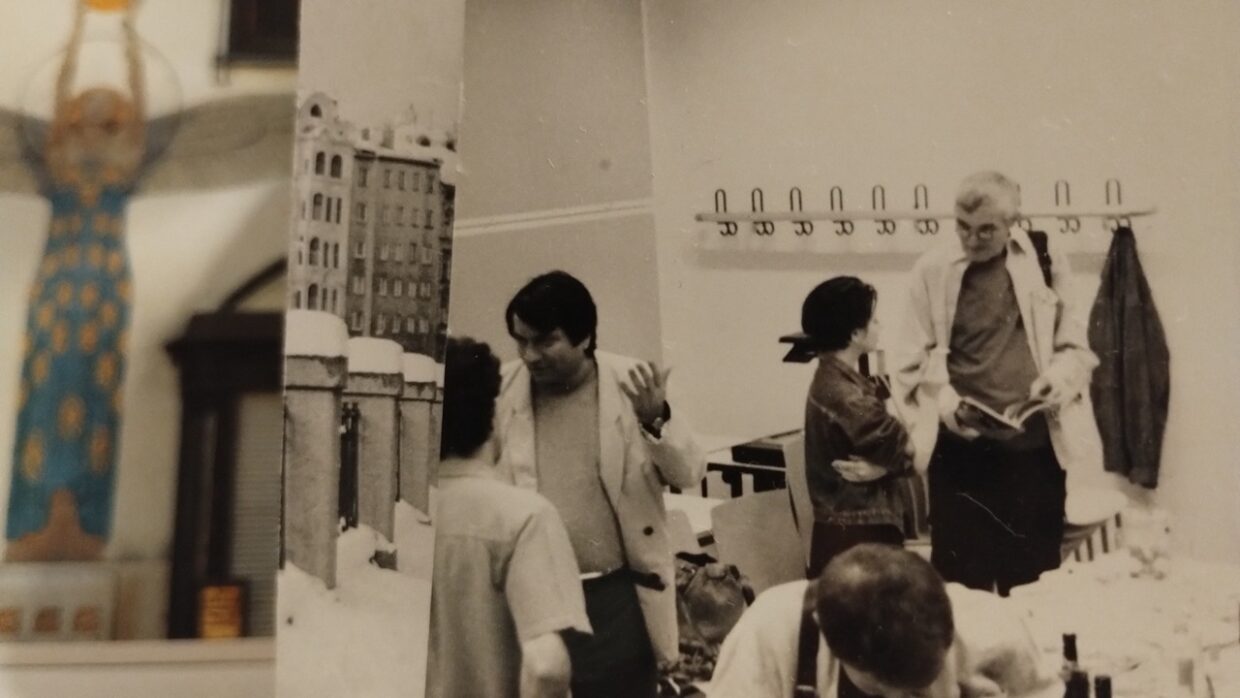
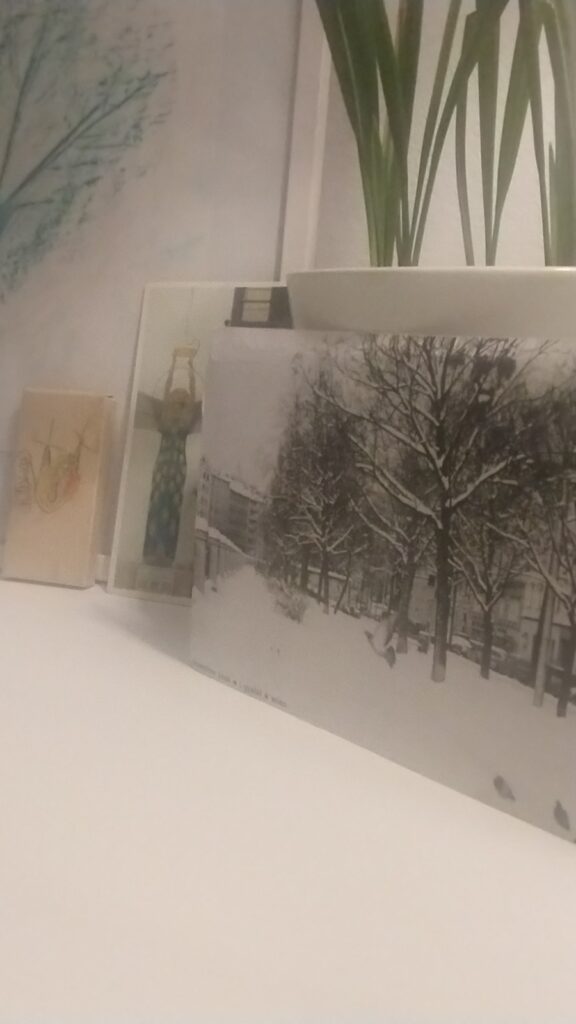
Kiemelt kép: Jobbra: Gergely Edit és Gyalai István beszélget, megismerkedésükkor. Fotó: BÉCSI MAGYAR INTÉZET, 2001. | Közepütt: Gyalai István saját készítésű képeslapja GE-nek, Gyergyóba, 2010. | Balra: TGM képeslapja GE-nek, Csíkszeredába: Walter Zednicek aus dem Buch WIENER ARCHITEKTUR um 1900. (GEfotó)
[szerk. megj.]
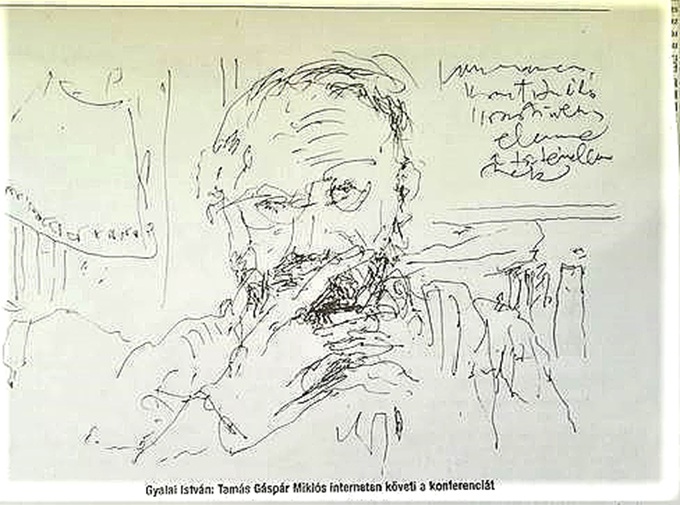
Fénykép a nyomtatott ÉS-ből. A grafikák elektronikusan nem archiváltak. De: mi most hozzáférhetővé tettük. Lásd lennebb, szürke mezőben: narancs+link.
A teljes grafika-sorozat most elérhető: itt.
ÉS, katt a lapra ismelyre TGM évekig előfizetett nekem. Print+e.Miközben Ő éhezett. Tehát. Olvasd. Támogasd.

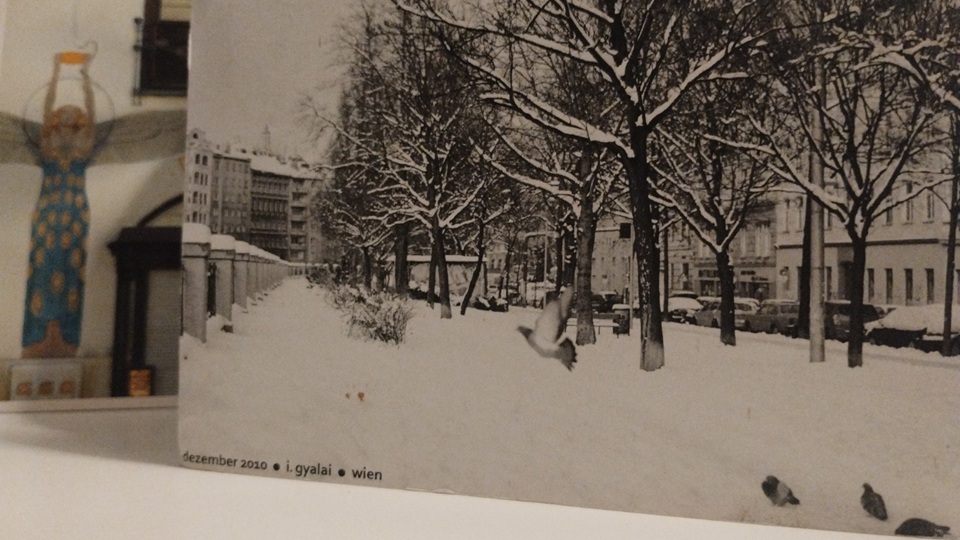
gedesktop, 2026.
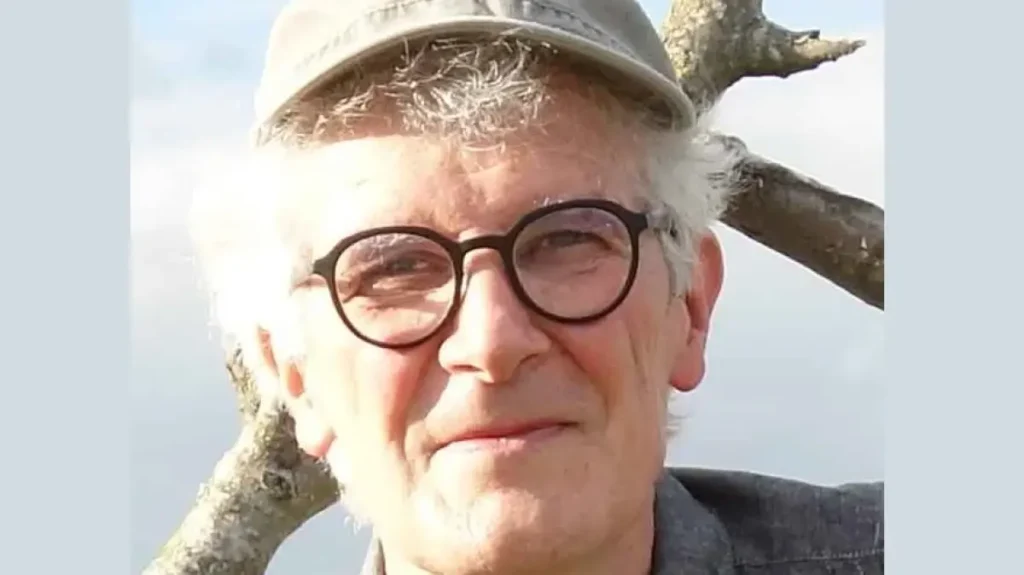 Kísérő, Bécsből, nemtúlpriv
Bécs, 2026. február 5., csütörtök:
A megnyitó napján, csütörtökön a lebonyolítás minden tartalékomat igénybe fogja venni.
Pénteken egy új tízrészes Workshop-sorozatot kezdek el a második kerületben. Így pénteken sem marad szabad időm.
A galéria olyan, amilyen.
Jakob Goubran volt diákomat, most a Kunstakademie végzőse, kértem meg a megnyitóra. Látta és szerette munkáimat, amint én is az övéit, merthogy fest és ír ő is.
17 kép lesz kiállítva terveim szerint. Kedden-szerdán fel kell őket raknom, lehetőleg értelmesen.
Nagyon érdekes és figyelemre méltó, hogy hogyan állsz hozzá a témához (internetes közzététel, számomra magas).
Elküldted már a levelet valóban Ivának? Vagy ez egyelőre egy terv?!
[ L. ge]
Elhoztam ma a nagy képet, esett az eső, de/és a kép nem tört össze.
Holnap másik két képet kell becsomagolnom és feladnom Lugano-ba.
Ott ápr. 18-án lesz egy csoportos kiállítás-megnyitó, egy templomban (“In spirito e verità”).
Szia, jó éjt!
I
Bécs, 2026. február 4., szerda:
Kedves Edit,
Szóval, semmi különös, ez adódott nemrég.
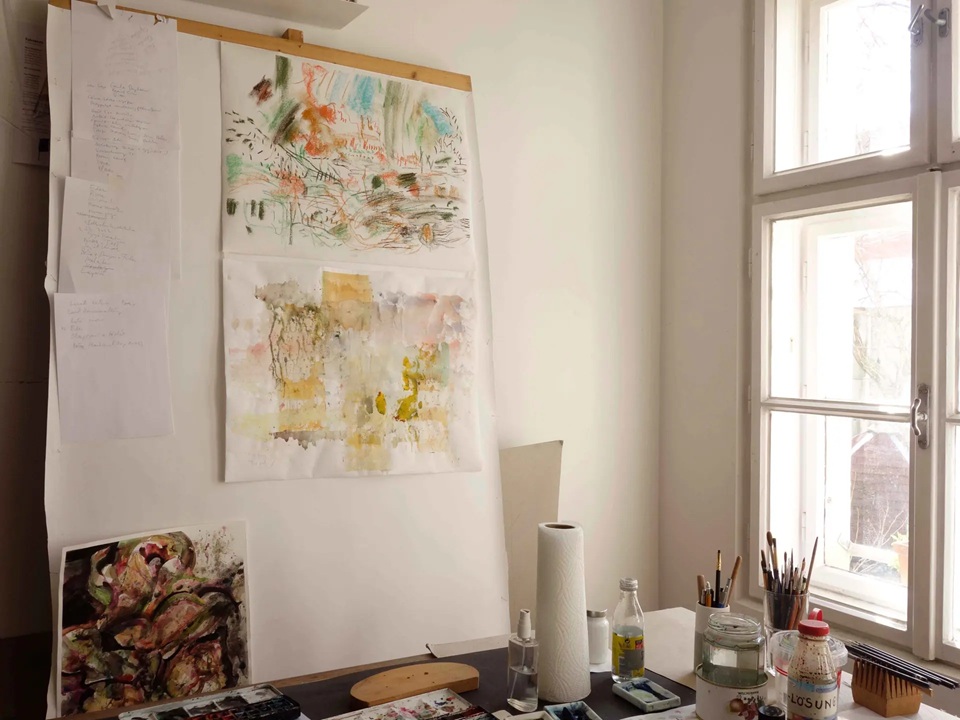
Gyalai-desktop, 2025.
de hát ezek is azok nekem, miért is ne,
a tollat-tust-papírt sose fogom megunni meg az össze-vissza tekergőző-kanyargó-bomló-záródó formáit a leghétköznapibb helyszíneknek se,
lelkünk-testünk téglája és zászlója, muskátli az eszünk ablakában.
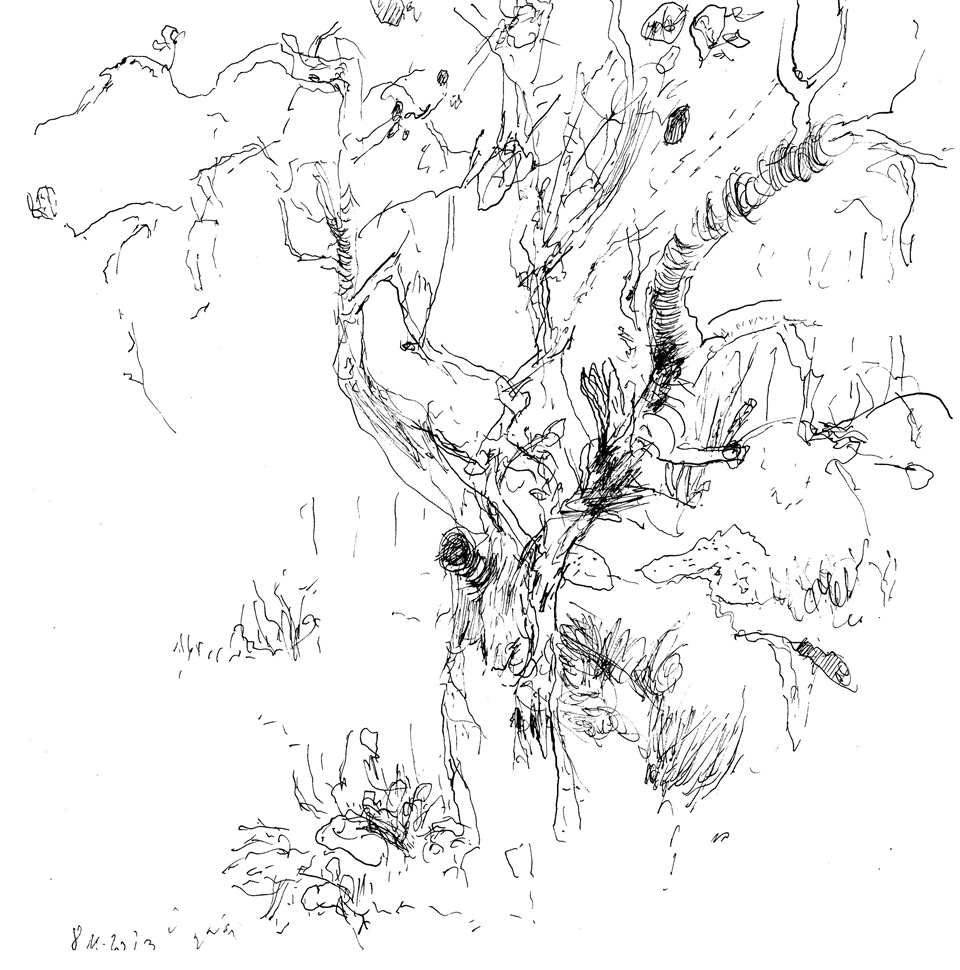
Gyalai István: Der Wind mit leeren Händen – A szél üres kézzel; 30 x 30 cm
- 3-as: Der Wind mit leeren Händen – A szél üres kézzel; 30 x 30 cm
- 6-os: Verwschwundene Blätter – Elkallódott levelek, 30 x 30 cm
- 8-as. Die Blühende (Sehnsucht) – A virágzó (vágyakozás) 24 x 32 cm.
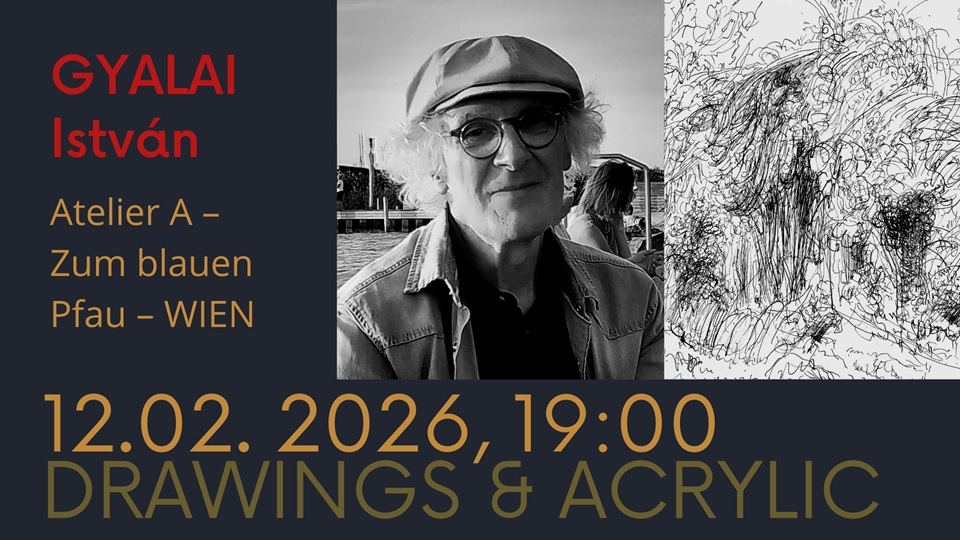
Facebook-prEvent: itt. Visual by Magánterület/GE.
Gyalai István:
A Rajzolásról
(Naplóbejegyzés, 2026. január négy, vasárnap)
Két kiállítással kezdem a bécsi új évet. Marina Abramović és a Künstlerhaus Ikonográfia: a kereszténység képzőművészeti összefüggései című tárlata a kortárs művészet apropóján.
Ragyogó, kristálytiszta fényben fürdő nap; templomba indulnék, de leszállok a Karlsplatzon, kiállításra támadt nagy kedvem. Ingyenjegyeim vannak.
Viszonylag sok az érdeklődő, a ruhatárat csak később veszem észre, mikor már begyömöszöltem mindent egy kis önkiszolgáló-fiókba. Az épület maga is „fényárban állt“, igazi élmény besétálni a bejáraton (buta biztonsági ajtó, dögnehéz.) Tegnap este visszaút Bödögéről, végig „vakító“ holdfényben, ott a jan. elsejei hó részben megmaradt, a kapuig sepert ösvény kifizetődő volt. (…)
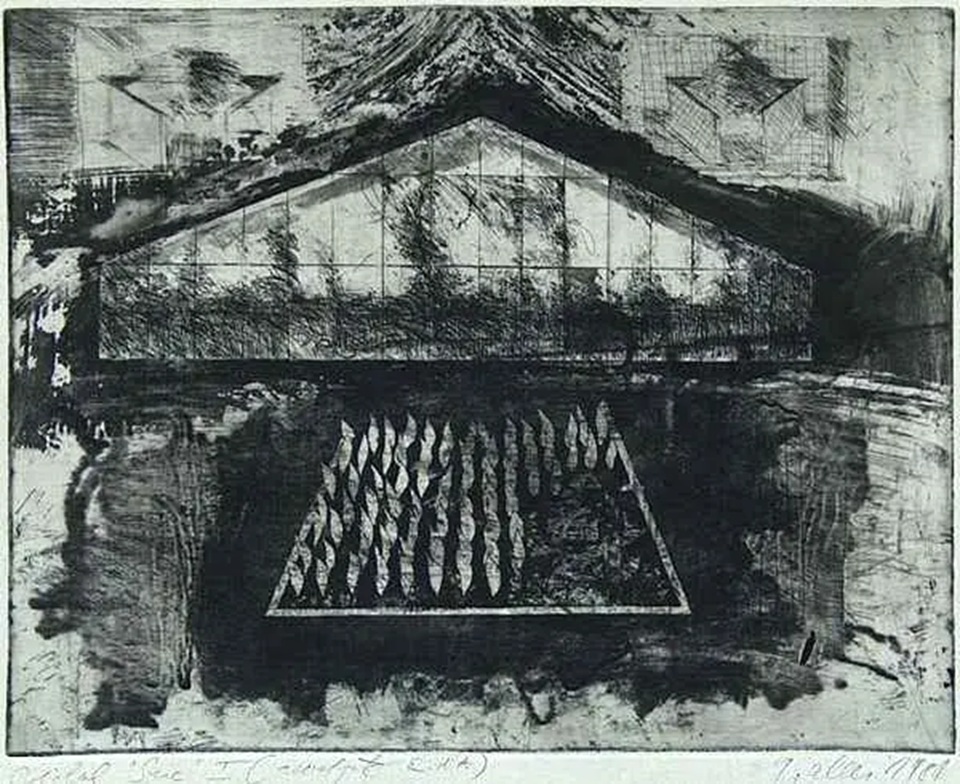
Négy nap a kis vertföld falú házban: lelassul ott a ritmus, sokkal kevesebb az elterelés, mármint a figyelemé. Az nagyon üdvös hatású. De hiányzik az „infrastruktúra“, csak rajzolni vagy olvasni lehet. (Mintha az nem lenne elég!)
Hát rajzoltam, a téli kert bőkezű kínálatából, a részletek finomsága, dramaturgiailag utólérhetetlen rafináltsága permanens ihlető forrás. Aztán a rajzok: a hagyományos technika kérdésessége.
(Erre jó példa Marina A. esete a kortárs technikával:
kongeniálisan használja ugyanis a fotó és a videó lehetősègeit, ami mindenképpen nem hagyományos technika, ezért eleve ad minden ötletnek egyfajta taszítást bele a ringbe, az aktualitás ringjébe.)
A tollrajzok a kert téli motívumainak apropóján igazi kihívásnak tűnnek s a hagyományos technika nem zavar abban, hogy állandóan újra megkíséreljem a lényegi megközelítést a jelenséghez, innen és túl a LÁTVÁNY csupasz magábanvalóságán. Vagyis
az állandó kihívást abban vélem megtalálni, hogy a természeti-időbeli folyamatok produktumaiként előálló formák és formaalakzatok, ráadásul a fény vagy az időjárás által még egyszer-többször megzavarva-modulálva, valahol nagy igazságokat szólnak a maguk igen szerény, alig hallható nyelvén.
Amire az odafigyelés számomra élmény.
Mégpedig egy nem akármilyen odafigyelésről van szó:
- a nézés-látás egyszer megadja az impulzust, felkelti a figyelmet és mozgósítja azt az energiát, ami nélkül nem mozdul a kéz, a toll, a vonal a papíron.
- Mikor már beindul a párbeszéd folyamata a szemem által közvetített benyomás alapján, akkor további mozgósításokra kerül sor: a technika kér szót: itt tehát a toll, a tollszár, a fekete tus, a papírlap.
- A TEST kér szót: a kéz, a váll, a lélegzet, a szívdobogás, az egész test megfeszülései és elernyedései, a pulzus, a hőmérséklet, a közérzet. S a Szellem, az intellektus (kéz a kézben a nonverbális intuíció-, ösztönszerű, érzéki rétegekkel) koncertdarabot fabrikál a „feladat“-ból, ami inkább egy „kis kaland“-nak értelmeződik, hisz van benne csábítás, érósz (több formában is!), reflexióba hajlás illetve reflexiónak reflexiójaként egyfajta alkotási öröm, ahogy a kis rajzok a vonalak, a toll-tus-papír-kéz kamaraegyüttesében valóra válnak.
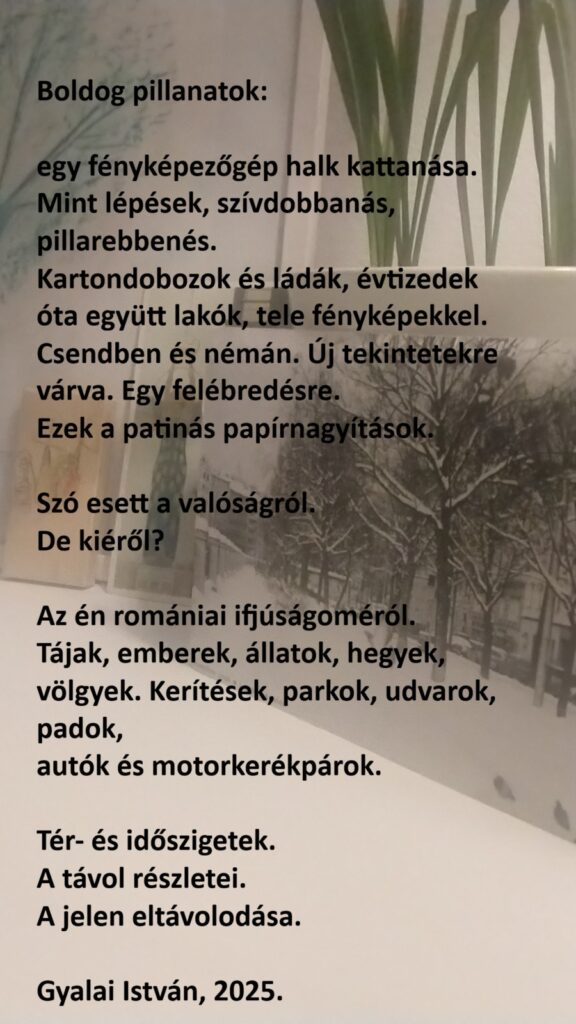 A kérdés nincs eldöntve, milyen mélységig hatolhat le ez a hagyományos módszerű eljárás,
milyen messzire-alaposan térképezheti fel ez a módszer a külső-belső megcsendülő szembefordulását egy pár négyzetcentiméteren, egynéhány perc időtartamáig,
néhány vonal, konstrukció, dramaturgia és energia-kontraszt-erő kiszervezésével, egy értelmesnek mondható képecskébe,
ami vizuális jelrendszerként kér magának helyet a nap alatt,
tudván tudva, hogy végeláthatatlan mennyiségben, fáradhatatlanul és elmondhatatlanul sokféle formában folyik a globális művészettermelés, hogy
se vége, se hossza a minden tizedmásodpercben világszerte elkészülő „képek“ számának.
Csakhogy – hál Istennek az alkotó szemszögéből nézve – ez nem kérdés munka közben, meglehetősen bénítóan is hatna.
De nem is ezért csinálja mindezt a rajz szerelmese, vagy megszállottja, vagy kétségbeesett örök híve. Hanem mert olthatatlanul lobog benne a hit, hogy „végül is érdemes“.
Lehet erről vitázni, Fux Pál (óh, mily remek ember volt!) írta így, ezt egy fekete-fehér analóg fotó hátoldalára („mutatom neki a rajzaimat“) valamikor a hetvenes évek elején, Nagyváradon.
Erre is sok válasz adható, hogy miért is érdemes. Vannak frivol és kevésbé magávalragadó válaszok, persze.
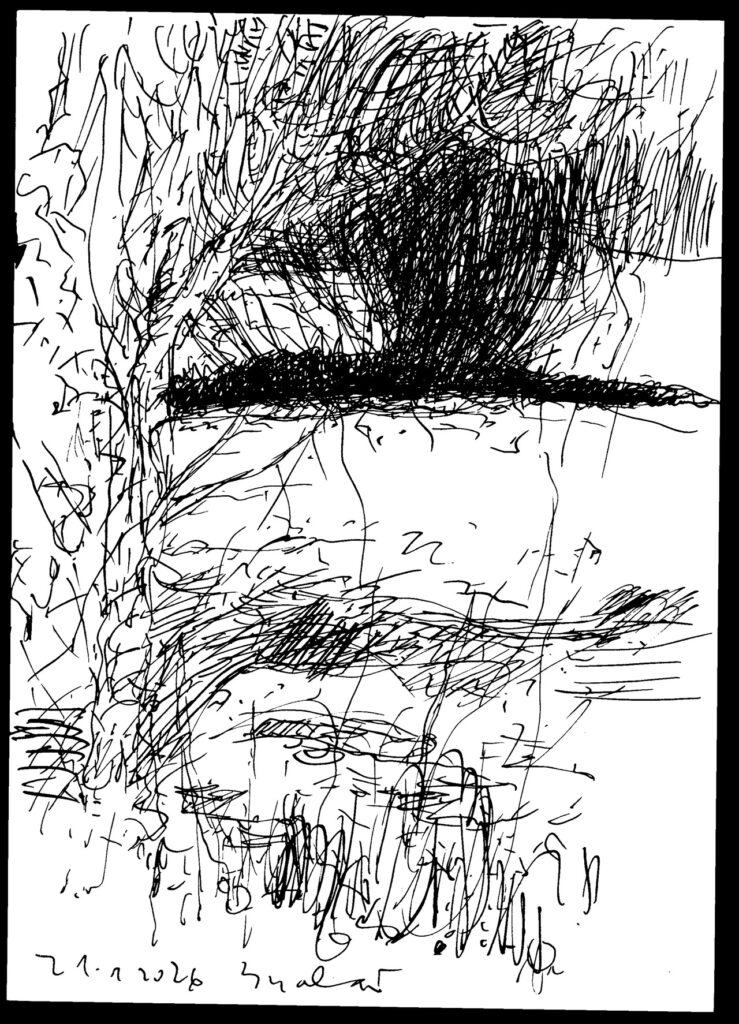
Gyalai István: A Kert.
De vannak ám olyanok is, amiket nem lehet csak úgy felülírni pragmatikus, racionális érvekkel.
És máris veszélyes közelségébe kerül a gondolat a Hit, a Misztika fogalmának, melyek bár megfoghatatlanok, alig bizonyíthatóak, plusz igen könnyen erre-arra manipulálhatóak, mégis beleszólnak abba a vitába – vagy, mint itt, a monológba
– amit nem kerülhet meg a rajzoló attól a pillanattól kezdve, hogy óvatosan félreteszi a frissen befejezett rajzlapot mondjuk békében száradni.
… A téma folytatható, kimerírthetetlen, titokzatos. Így fogok tenni!
Gyalai István
#MusicHeals Saxicola Rubi: Laurent Rochelle – Dirk Vogeler, Barcelona live, 2021. More on: site.
Gyalai István: Über das Zeichnen
(Tagebucheintrag, Sonntag, 4. Januar 2026)
Ich beginne das neue Wiener Jahr mit zwei Ausstellungen. Marina Abramović und die Ausstellung des Künstlerhauses „Ikonographie: Bildkünstlerische Zusammenhänge des Christentums“ aus der Perspektive der zeitgenössischen Kunst.
Ein strahlender Tag, gebadet in kristallklarem Licht; eigentlich würde ich in die Kirche gehen, doch ich steige am Karlsplatz aus, denn große Lust auf eine Ausstellung überkommt mich. Ich habe Freikarten.
Es gibt relativ viele Interessierte, die Garderobe bemerke ich erst später, als ich bereits alles in ein kleines Selbstbedienungsfach hineingestopft habe. Auch das Gebäude selbst „stand im Lichtstrom“, es ist ein echtes Erlebnis, durch den Eingang zu gehen (dumme Sicherheitstür, wahnsinnig schwer).
 Gestern Abend die Rückfahrt aus Bödöge, die ganze Strecke im „blendenden“ Mondlicht; dort ist der Neujahrsschnee teilweise liegen geblieben, der bis zum Tor freigeschaufelte Weg hat sich gelohnt. (…)
Gyalai István
Vier Tage in dem kleinen Haus mit Stampflehmwänden: Dort verlangsamt sich der Rhythmus, es gibt viel weniger Ablenkung – genauer gesagt: für die Aufmerksamkeit. Das wirkt ausgesprochen heilsam. Aber die „Infrastruktur“ fehlt; man kann „nur“ zeichnen oder lesen. (Als ob das nicht genug wäre!)
Also habe ich gezeichnet, aus dem großzügigen Angebot des Wintergartens heraus; die Feinheit der Details, ihre dramaturgisch unerreichbare Raffinesse sind eine permanente Inspirationsquelle. Dann die Zeichnungen selbst:
die Fragwürdigkeit der traditionellen Technik. (Ein gutes Beispiel dafür ist Marina A. im Umgang mit zeitgenössischer Technik: Sie nutzt die Möglichkeiten von Fotografie und Video kongenial, was eindeutig „keine traditionelle“ Technik ist und jeder Idee von vornherein eine gewisse Abstoßung mit in den „Ring“ gibt – in den Ring der Aktualität.)
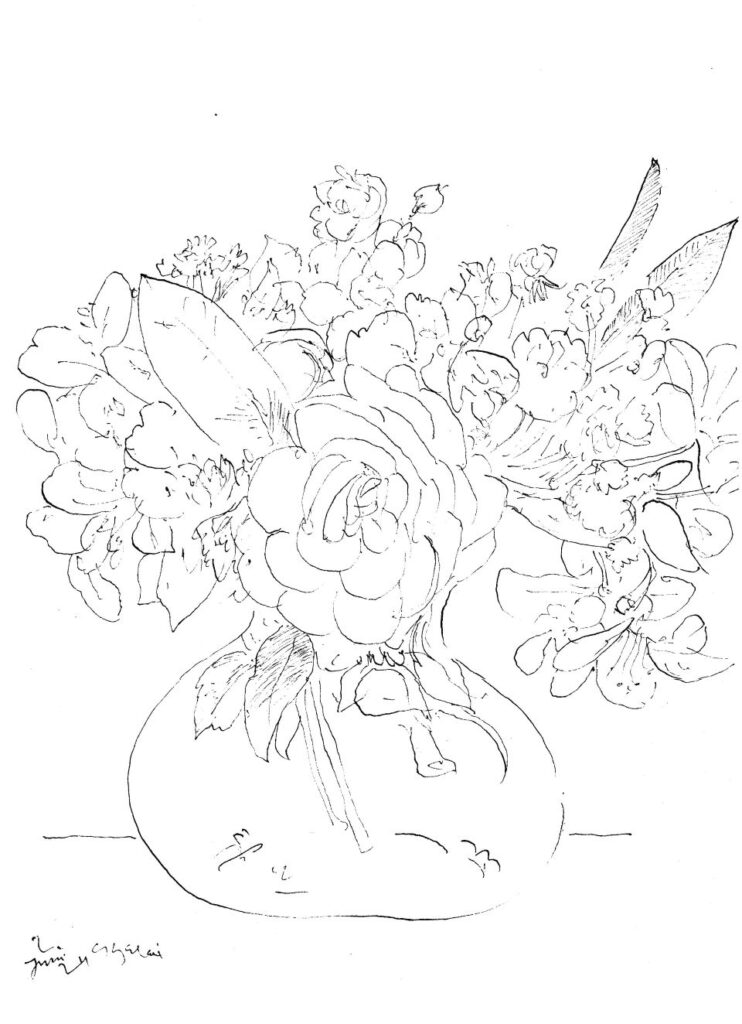
Gyalai István: Die Blühende (Sehnsucht) – A virágzó (vágyakozás) 24 x 32 cm
Die Federzeichnungen ausgehend von den winterlichen Motiven des Gartens erscheinen als echte Herausforderung, und die traditionelle Technik hindert mich nicht daran, immer wieder neu zu versuchen, dem Phänomen auf eine „wesentliche“ Weise näherzukommen – diesseits und jenseits der nackten Selbstgegebenheit der ERSCHEINUNG.
Das permanente Herausfordernde sehe ich darin, dass die als Produkte naturzeitlicher Prozesse entstandenen Formen und Formgebilde, dazu noch ein- oder mehrfach durch Licht oder Wetter „gestört“ bzw. moduliert, irgendwo „große Wahrheiten“ aussprechen – in ihrer äußerst bescheidenen, kaum hörbaren Sprache.
Dem Aufmerksamkeit zu schenken, ist für mich ein Erlebnis.
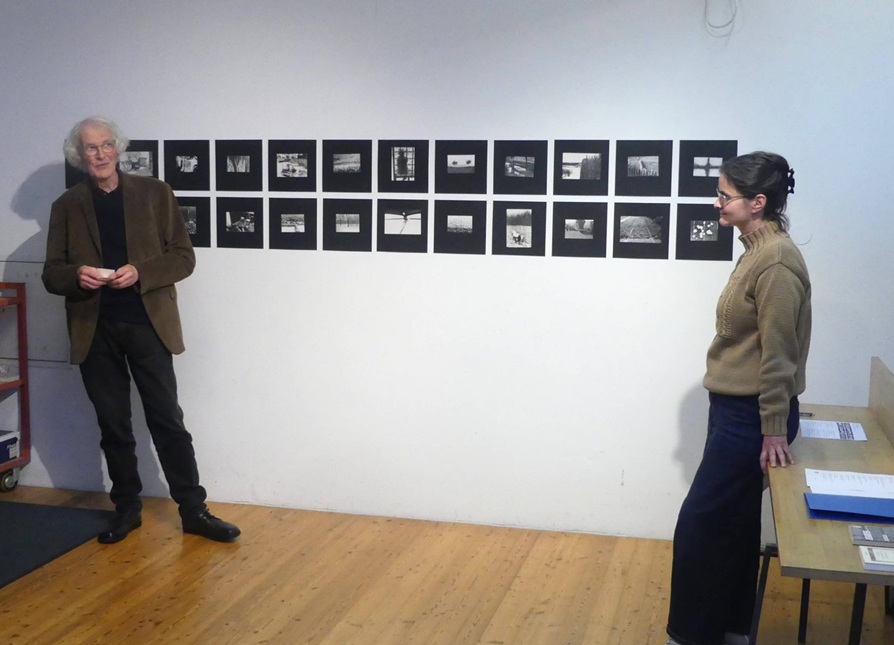
István Stefan Gyalai spricht bei der Vernissage der Fotoausstellung in der Praterstraße, Wien / István Stefan Gyalai vorbește la vernisajul expoziției de fotografie din Strada Prater, Viena. Forrás
Und zwar geht es hier nicht um irgendeine Aufmerksamkeit: Das Sehen-Wahrnehmen gibt zunächst den Impuls, weckt die Aufmerksamkeit und mobilisiert jene Energie, ohne die sich die Hand, die Feder, die Linie auf dem Papier nicht bewegt. Sobald der Dialogprozess auf Grundlage der durch das Auge vermittelten Eindrücke „anspringt“, kommen weitere Mobilisierungen hinzu: Die „Technik“ meldet sich zu Wort – also Feder, Federhalter, schwarze Tusche, das Papierblatt. Der KÖRPER meldet sich zu Wort: die Hand, die Schulter, der Atem, der Herzschlag, die Spannungen und Entspannungen des ganzen Körpers, Puls, Temperatur, Befinden.
Und der Geist, der Intellekt (Hand in Hand mit den nonverbalen, intuitiven, instinktiven, sinnlichen Schichten) bastelt aus der „Aufgabe“ ein Konzertstück, das sich eher als „kleines Abenteuer“ deuten lässt, denn es enthält Verführung, Eros (in mehreren Formen!), die Neigung zur Reflexion sowie – als Reflexion der Reflexion – eine Art „Schaffensfreude“, während die kleinen Zeichnungen im Kammerensemble von Linie, Feder, Tusche, Papier und Hand Wirklichkeit werden.
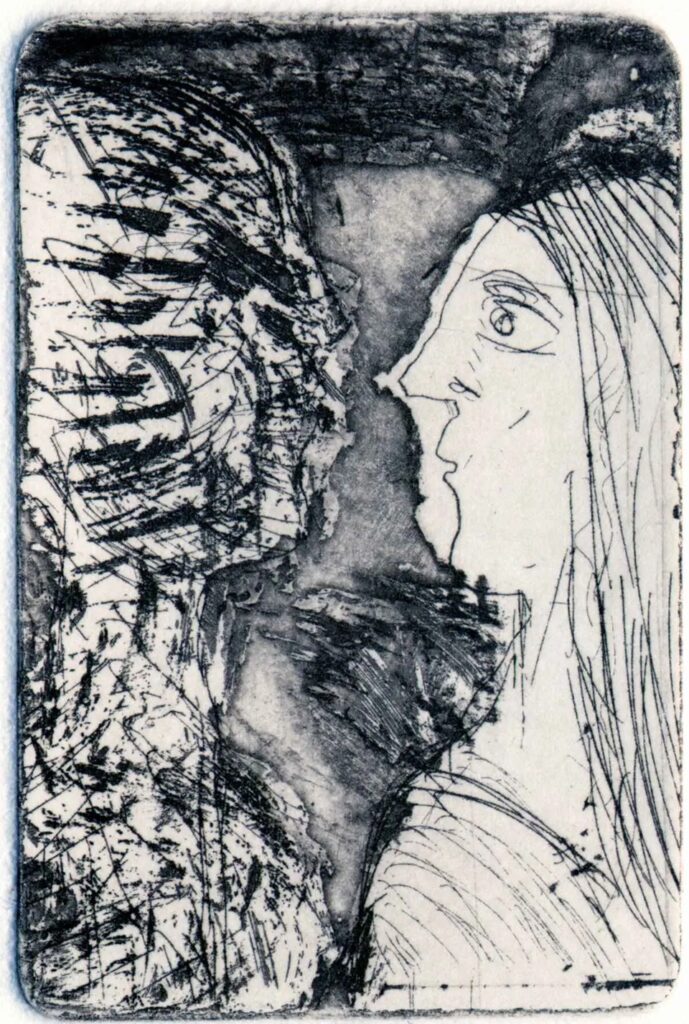
Die Frage ist nicht entschieden, wie tief dieses „traditionelle“ Verfahren vordringen kann, wie weit und gründlich diese Methode das nach außen und innen widerhallende Gegenüber auf wenigen Quadratzentimetern, über einige Minuten hinweg, mit der Auslagerung von ein paar Linien, Konstruktionen, Dramaturgien und Energie-Kontrasten in ein halbwegs sinnvolles Bildchen kartieren kann – ein Bildchen, das als visuelles Zeichensystem seinen Platz unter der Sonne beansprucht, im vollen Bewusstsein, dass die „globale“ Kunstproduktion in unendlicher Menge, unermüdlich und in unvorstellbarer Vielfalt abläuft und dass die Zahl der weltweit in jeder Zehntelsekunde entstehenden „Bilder“ weder Anfang noch Ende hat.
Doch – Gott sei Dank aus der Perspektive des Schaffenden – ist das während der Arbeit keine Frage; sie würde sogar ziemlich lähmend wirken.
Aber auch deshalb tut der Liebhaber des Zeichnens das alles nicht. Oder der Besessene. Oder der verzweifelte, ewige Anhänger. Sondern weil in ihm unauslöschlich der Glaube lodert, dass es „letztlich doch lohnt“. Darüber kann man streiten; Fux Pál (ach, was für ein großartiger Mensch er war!) schrieb das so auf die Rückseite eines schwarz-weißen analogen Fotos („ich zeige ihm meine Zeichnungen“) irgendwann Anfang der siebziger Jahre in Großwardein.
Auch darauf gibt es viele Antworten, warum es sich lohnt. Es gibt frivole und weniger mitreißende Antworten, gewiss. Aber es gibt auch solche, die sich nicht einfach mit pragmatischen, rationalen Argumenten überschreiben lassen.
Und schon gerät der Gedanke in gefährliche Nähe zu den Begriffen Glaube und Mystik, die zwar ungreifbar, kaum beweisbar und zudem leicht in alle Richtungen manipulierbar sind, sich aber dennoch in jene Debatte – oder wie hier:
in den Monolog – einmischen, der für den Zeichner unvermeidlich wird ab dem Moment, in dem er das frisch vollendete Blatt vorsichtig beiseitelegt, damit es in Ruhe trocknen kann.
… Das Thema ist fortsetzbar, unerschöpflich, geheimnisvoll. So werde ich es halten!
István Gyalai
#ArtHeals meghívó:
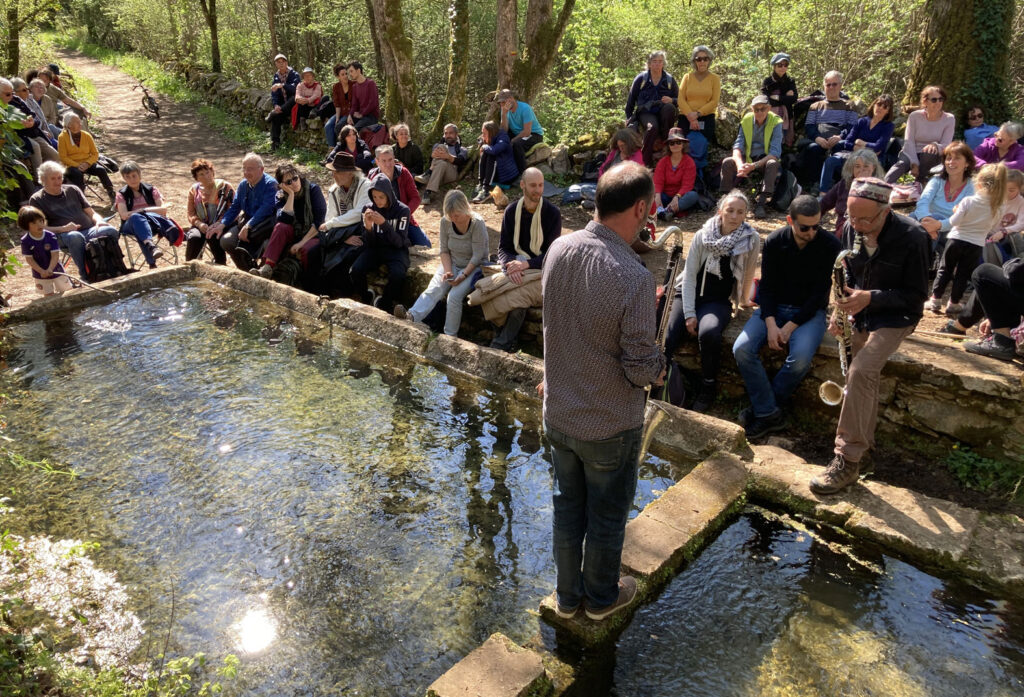 Saxicola Rubi
Feat. GERGELY EDIT: Csiszárfürdői történetek (könyvbemutató)
2026. szeptember – Csiszár-fürdő
Részletek. Újabb helyszíneket, társulásokat fogadunk. contact@gergelyedit.com

ACCOMPANYING NOTE, FROM VIENNA, NOT TOO PRIVATE
VIENNA, WEDNESDAY, FEBRUARY 4, 2026
Dear Edit,
I have already begun filling out the Great Questionnaire
(the GUEST interview is underway – GE),
but I didn’t get very far, because I had to continue organizing the works for the exhibition:
titles, sizes, hangers, all that.
On top of that, the weather was unpleasantly damp. I turned back and decided to bring the large framed piece tomorrow instead, hopefully in drier conditions.
It’s a big one – 125 × 75 cm, glass and passe-partout – something I’d rather not break, nor soak.
In the meantime, I scanned three out of the seventeen works I selected for this small gallery
(it’s called Atelier A – Zum blauen Pfau, To the Blue Peacock).
The owner, Iva, is an elderly Czech émigré (from ’68), a kind woman who moves between Prague and Slovakia, and she also teaches at the Volkshochschule, much like myself.
So nothing particularly special happened – this simply came about recently.
I selected drawings.
At the monastery exhibition before, there were fifty-five works; now, this feels more than enough.
There are plenty of drawings here.
I’m saving my colored works for another occasion – those would be truly interesting as well.
But these are interesting to me too, and why shouldn’t they be?
I will never tire of pen, ink, and paper, nor of the winding, twisting, curling, dissolving and closing forms of even the most everyday places.
Of course, the garden or the trees are already privileged from a formal point of view.
And form, after all, is some kind of primordial element:
THE BRICK AND THE FLAG OF OUR SOUL–BODY,
A GERANIUM IN THE WINDOW OF OUR MIND.
István Gyalai: “Der Wind mit leeren Händen / The Wind with Empty Hands”, 30 × 30 cm
For now, I can send fresh, lower-resolution reproductions of three drawings, with their titles:
-
No. 3: Der Wind mit leeren Händen / The Wind with Empty Hands, 30 × 30 cm
-
No. 6: Verschwundene Blätter / Scattered Leaves, 30 × 30 cm
-
No. 8: Die Blühende (Sehnsucht) / The Blooming One (Longing), 24 × 32 cm
All three are pen drawings on paper, 2023–2024.
I’ll also attach an earlier text of mine here – I wrote it in January. I’ll return to it later, since you have questions related to this topic.
Avem ce face – we have more than enough to do. (RO; transl. GE)
Good night, greetings, and success always –
on the Székely barricades,
and no less on the global virtual ones,
and also on the rainbow fronts of motherhood.
Yours,
István
Facebook pre-Event: here. Visual by Magánterület/GE
GYALAI ISTVÁN: ON DRAWING
(Diary entry, Sunday, January 4, 2026)
I begin the new Viennese year with two exhibitions.
Marina Abramović, and the exhibition at the Künstlerhaus titled
Iconography: The Visual Art Contexts of Christianity, approached through contemporary art.
A radiant day, bathed in crystal-clear light. I’m heading to church, but get off at Karlsplatz instead – a sudden urge for exhibitions comes over me. I have free tickets.
There’s quite a crowd. I only notice the cloakroom later, after I’ve already stuffed everything into a small self-service locker.
The building itself stood “flooded with light” – a real experience to enter through the doorway
(stupid security door, terribly heavy).
Last night, returning from Bödögér, the entire way was lit by a “blinding” moonlight.
Some of the New Year’s snow was still there; the path swept to the gate proved worthwhile.
…
Four days in the small house with rammed-earth walls:
the rhythm slows down there, distractions are far fewer – I mean distractions of attention.
This has a very beneficial effect.
What’s missing is “infrastructure” – one can only draw or read.
(As if that weren’t enough!)
So I drew – from the generous offerings of the winter garden.
The delicacy of details, its dramaturgically unsurpassable refinement, is a constant source of inspiration.
Then the drawings themselves: the question of traditional technique.
(Marina A.’s case with contemporary technique is a good example:
she uses photography and video in a congenial way – clearly non-traditional media – which immediately throws every idea into the ring of actuality.)
Pen drawings, prompted by winter garden motifs, seem like a genuine challenge.
And traditional technique does not hinder me from constantly attempting an essential approach to phenomena –
from this side and beyond the naked self-existence of mere APPEARANCE.
That is to say:
I FIND THE CONSTANT CHALLENGE IN THE FACT THAT FORMS AND FORMATIONS,
ARISING AS PRODUCTS OF NATURAL–TEMPORAL PROCESSES,
AND FURTHER DISTURBED AND MODULATED BY LIGHT OR WEATHER,
UTTER GREAT TRUTHS IN THEIR OWN MODEST, BARELY AUDIBLE LANGUAGE.
Paying attention to this is, for me, an experience.
And not just any attention:
Seeing gives the initial impulse, awakens attention, and mobilizes the energy without which the hand, the pen, the line on paper would not move.
Once the process of dialogue begins – based on impressions mediated by the eye – further mobilizations occur:
Technique demands a voice: the pen, the pen holder, the black ink, the sheet of paper.
 The BODY demands a voice: the hand, the shoulder, the breath, the heartbeat; the tensions and releases of the entire body; pulse, temperature, general sensation.
And the Spirit, the intellect – hand in hand with non-verbal, intuitive, instinctive, sensual layers – fashions a concert piece out of the “task”, which is better understood as a “small adventure”:
there is seduction in it, eros (in several forms!), a leaning toward reflection, and reflection upon reflection –
a kind of creative joy, as the small drawings come into being through the chamber ensemble of line, pen, ink, paper, and hand.
The question remains undecided:
how deeply can this traditional method penetrate,
how far and thoroughly can it map the confrontation of outer and inner resonances on a few square centimeters, over the span of a few minutes,
through the outsourcing of a few lines, constructions, dramaturgies, and energy contrasts,
into a small image that can be considered meaningful,
an image that asks for its place under the sun as a visual sign system,
fully aware that an endless quantity of “images” is being produced worldwide, tirelessly and unimaginably varied, every tenth of a second.
Thankfully – from the creator’s point of view – this is not a question during the act of work; it would be rather paralyzing.
And that is not why the lover of drawing, the devotee, the desperate lifelong believer does this anyway.
They do it because an unquenchable faith burns within them that, in the end, it is worth it.
One can debate this.
Pál Fux (oh, what a remarkable man he was!) once wrote this on the back of a black-and-white analog photograph
(“I’m showing him my drawings”) sometime in the early 1970s in Oradea.
There are many answers to why it is worth it.
There are frivolous and less compelling ones, of course.
But there are also answers that cannot simply be overwritten by pragmatic, rational arguments.
And at that point, thought comes dangerously close to the concepts of Faith and Mysticism –
intangible, scarcely provable, easily manipulated –
yet inevitably intervening in the debate, or here, in this monologue,
which the draughtsman cannot avoid from the moment he carefully sets aside the freshly finished drawing to dry in peace.
…
The subject is continuable, inexhaustible, mysterious.
And so I shall continue.
István Gyalai
Exkluzív interjúink:
 Weber Kristóf Fotó: Lenthár Balázs • Laurent Rochelle Stéphane Migot • Gergely Edit Winter Zeev • Balázsi Gábor • Gyalai István • Arena Minda Gertrud Gozner
Olvasd el Laurent Rochelle zeneszerző-szaxofonművész-lemezkiadóval készült friss interjúnkat. • Weber Kristóf zeneszerző-kritikus a művészet- és AI kapcsolatáról gondolkodik. • Balázsi Gábor newyork-i rákkutató emberi léptékben enged közel egy FLOWinterjúban. HAMAROSAN: Gyalai István bécsi grafikus.
És Neked miben segíthetek? • GEpress-referenciák.
A Magánterület 2.0 – geXperience független microsite és ArtHeals fórum.
- Műfaja: Serious matters & elitbulvár. Glamdoire.
- Stratégiai cél: femicide-tribute.
- Fenntartó: saját büdzsé, saját szerkesztés, saját vétó.
- Kreatív kivételek és vizuális jogok: Arena Minda: Arena Minda
Concept & Curation
Magánterület 2.0 — Serious matters & elite-tabloid. Glamdoire.
Strategic aim: femicide-tribute.
Editor: Gergely Edit
Freelance parteners:
Photo: Attila Simon • Δούλος Ιωάννης • Gertrud Gozner
MusicHeals: Laurent Rochelle
Sound engineer: Winter Zeev
Microsite backdrop: Zsolt Kovács
Thank you for being here —
in a place where memory is work, and beauty is a kind of resistance.
-
Az arenaminda-gergelyedit projekt: LÉPJ BE